Category | IT Service Management
Last Updated On 02/02/2026

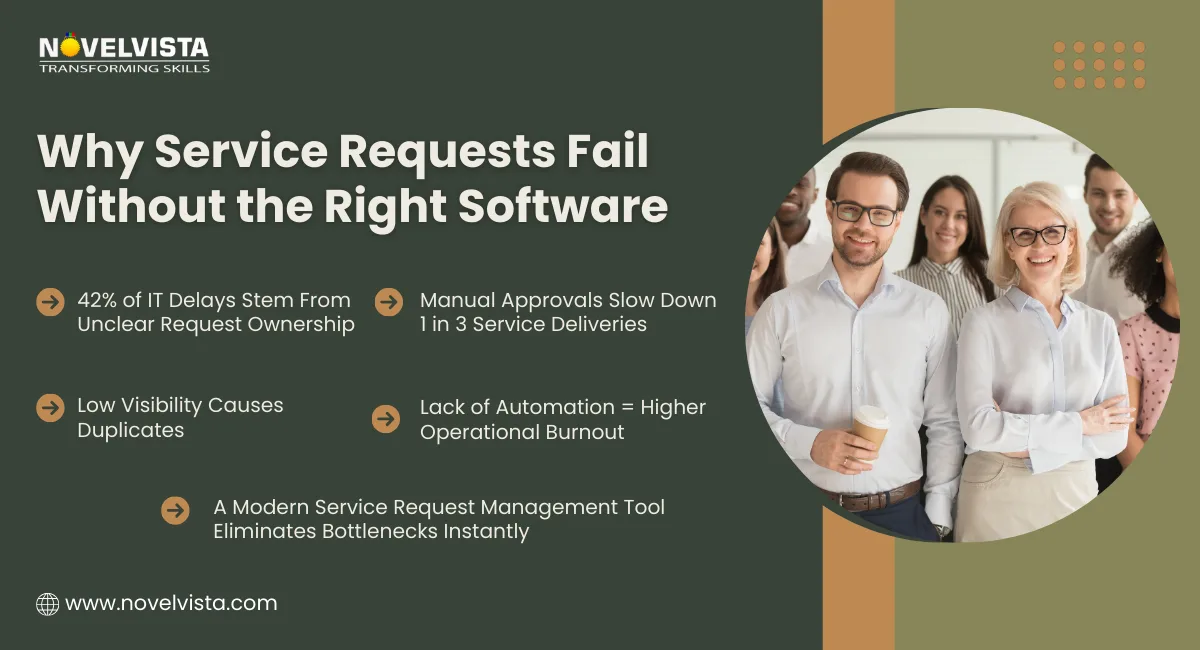
If you’ve been part of any IT team in the last few years, you’ve probably noticed one thing: service requests aren’t slowing down—they’re multiplying. New apps, hybrid work setups, stricter access controls, constant onboarding and offboarding… it all adds up. What used to be a manageable stream of tickets has turned into a nonstop flow that demands structure, speed, and serious automation.
This growing chaos is exactly why Service Request Management Software has become the backbone of modern IT operations. Whether you're a service desk lead, IT manager, CIO, or part of a scaling startup, you’ve probably felt the pressure to handle requests faster, more accurately, and with better transparency. In this blog, you’ll get to know how modern Service Request Management Software works and which tools can help you streamline every request from start to finish.
Before diving into best practices or process flows, let’s go straight to what really matters today—the tools. Because no matter how strong your processes are, the right platform can transform your entire request lifecycle.
Service Request Management Software is a dedicated platform that helps IT teams capture, track, fulfill, and report on service requests—whether it’s new hardware, software access, configuration changes, or onboarding workflows. Unlike a basic ticketing tool, it offers automated routing and approvals, service catalogs, role-based access, fulfillment workflows, SLA tracking, and intuitive self-service portals. In most organizations, this platform functions as part of a broader IT Service Request Management System aligned with ITSM Service Request Management and ITIL best practices. With that foundation set, let’s dive directly into the tools shaping modern IT operations.
Modern businesses rely on automation, intelligent routing, and integrated workflows. These tools offer exactly that. Below are the most widely used platforms powering today's Service Request Management Software landscape.
When people think of enterprise-grade ITSM, they often think ServiceNow. It’s one of the most powerful Service Request Management Tools because it supports end-to-end automation—from intake to fulfillment.
Why IT Teams Choose ServiceNow:
If your organization handles thousands of monthly requests, ServiceNow’s scale and reliability make it a top choice.
Freshservice is a cloud-native tool designed for organizations that want powerful functionality without the complexity of enterprise systems.
What Makes Freshservice Stand Out:
If your Service Request Management Process Flow needs clarity and automation, Freshservice is one of the easiest tools to implement.
Jira Service Management is ideal for companies where IT and development teams work closely together—startups, SaaS companies, and engineering-driven organizations.
Key Strengths:
For teams that want agility along with structured ITSM Service Request Management, Jira is a great option.
ManageEngine is well known for its ITIL-aligned processes, making it a strong fit for organizations prioritizing standards and compliance.
Highlights:
This tool works well for organizations adopting ITIL practices while keeping software cost-effective.
Zendesk isn’t just a customer support tool—it’s also widely used for internal service requests.
Why Teams Use Zendesk:
If your service desk handles both internal and external requests, Zendesk is a strong hybrid option.
BMC Helix is preferred by large enterprises requiring advanced workflows, AI, and multi-department automation.
Key Capabilities:
This tool is ideal for organizations that need high reliability and deep automation.
Whether you use ServiceNow or Freshservice, the Service Request Management Process Flow follows a similar lifecycle. A strong IT Service Request Management System automates each stage:
1. Request Submission
Users submit requests through a dedicated portal, email, chat, or tool integrations. A good Service Request Management Software centralizes all incoming requests so nothing gets lost, ensuring teams have full visibility from the very first step.
2. Categorization & Prioritization
The system automatically categorizes each request—whether it's access, hardware, software, or configuration—based on predefined rules. This helps streamline the Service Request Management Process Flow and ensures urgent items receive priority.
3. Automated Routing
Using AI or rule-based logic, the software routes requests to the right technician or team without manual intervention. This automation reduces delays and improves overall efficiency within your Service Request Management Tool.
4. Approval Workflow
For requests that require authorization—such as software purchases or system access—the system triggers automated approval workflows. This keeps your IT Service Request Management System consistent, compliant, and error-free.
5. Fulfillment
Once assigned, technicians resolve the request using linked assets, knowledge articles, or predefined templates. Modern Service Request Management Software simplifies fulfillment by guiding teams through each task in a structured manner.
6. Closure
After the request is completed, it is formally closed with documentation, notes, and resolution details. This maintains a clean audit trail and supports ITSM Service Request Management best practices.
7. Feedback & Reporting
Dashboards track SLAs, identify bottlenecks, and highlight team productivity trends. Strong analytics help organizations improve their Service Request Management Software workflows over time and make data-driven decisions.
The beauty of modern Service Request Management Software is that every step is standardized, automated, and fully trackable—making service delivery faster, more predictable, and far more efficient.
Tools alone won’t fix operational challenges. The impact comes from how well the software aligns with your processes.
Here’s how to make the most of your chosen platform:
1. Build a Clear Service Catalog: A well-structured catalog reduces confusion and ensures employees request the right services.
2. Automate Repetitive Actions: Use workflow automation features to eliminate manual approvals or routing.
3. Keep the Self-Service Portal Simple: The easier it is, the more employees will use it—reducing ticket volume.
4. Integrate Your System with Other Tools: Connect HR tools for onboarding, DevOps tools for deployment, or finance tools for approvals.
5. Train Employees and Communicate Changes: Even the best software fails if people don’t know how to use it.
6. Track KPIs and Continually Improve: Metrics like FRT, MTTR, SLA compliance, and request backlog help optimize workflows.
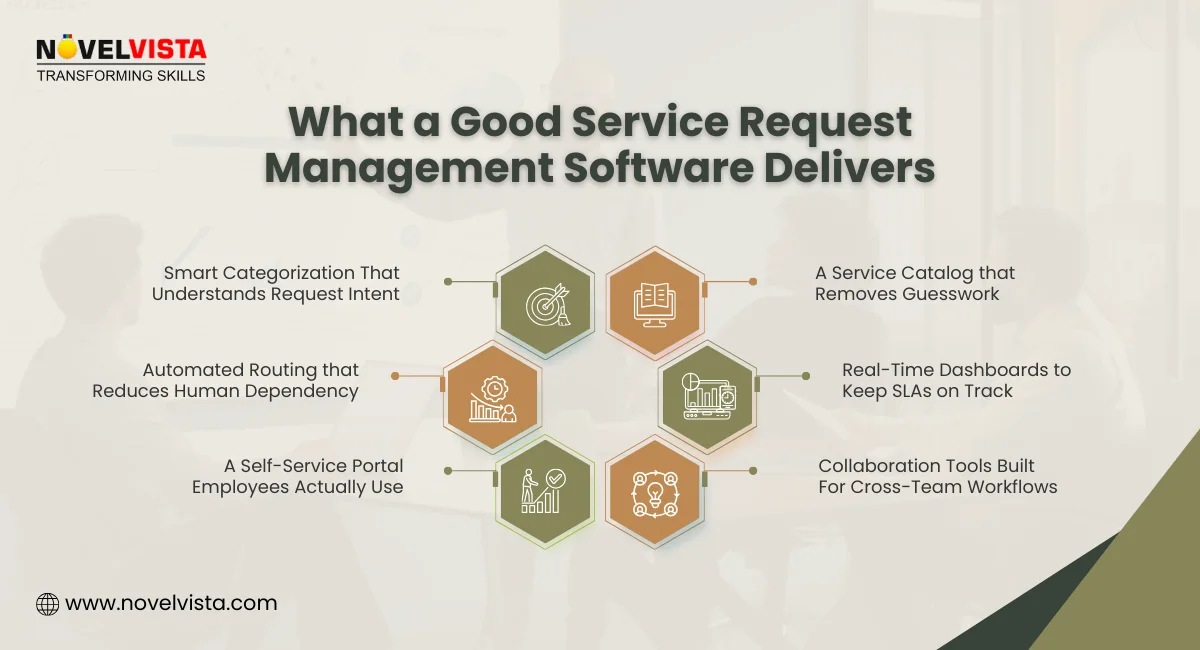
By following these practices, your chosen Service Request Management Tool can quickly become a high-value asset in your IT ecosystem. And as you explore modern tools and best practices, you’ll notice how closely today’s Service Request Management platforms align with the capabilities found in ITIL software, ensuring consistency, automation, and a more predictable service experience.
In a digital-first workplace, the volume of service requests isn’t slowing down—it's accelerating. The difference between chaos and control lies in choosing the right Service Request Management Software that aligns with your scale, workflows, and IT maturity level.
Whether you pick ServiceNow for enterprise automation, Freshservice for simplicity, Jira for dev-driven environments, or ManageEngine for ITIL alignment, the goal is the same: make service delivery faster, predictable, and more efficient.
A modern IT Service Request Management System is no longer optional—it’s a strategic tool for organizational productivity, employee satisfaction, and operational excellence.

Ready to strengthen your ITSM fundamentals and elevate your service delivery expertise?
Join NovelVista’s ITIL® 4 Foundation Certification Training and build a rock-solid understanding of service value systems, request management practices, and modern digital service workflows. Designed for IT professionals, service desk teams, and future IT leaders, this course equips you with practical skills, real-world ITSM application, and globally recognized certification.
Start your ITIL 4 learning journey today and transform the way your organization delivers services.
Author Details

Course Related To This blog
ITIL4 Specialist Monitor Support and Fulfil Certification
ITIL4 Specialist Acquiring & Managing Cloud Services
ITIL 4 Specialist Sustainability in Digital & IT
ITIL® 4 Strategic Leader Digital And IT Strategy (DITS)
ITIL® 4 Specialist Drive Stakeholder Value
ITIL® 4 Specialist High Velocity IT
ITIL® 4 Strategist Direct, Plan & Improve
ITIL® 4 Specialist Create Deliver & Support
ITIL® 4 Foundation Certification
Confused About Certification?
Get Free Consultation Call
Stay ahead of the curve by tapping into the latest emerging trends and transforming your subscription into a powerful resource. Maximize every feature, unlock exclusive benefits, and ensure you're always one step ahead in your journey to success.