
Category | CLOUD and AWS
Last Updated On 29/05/2026
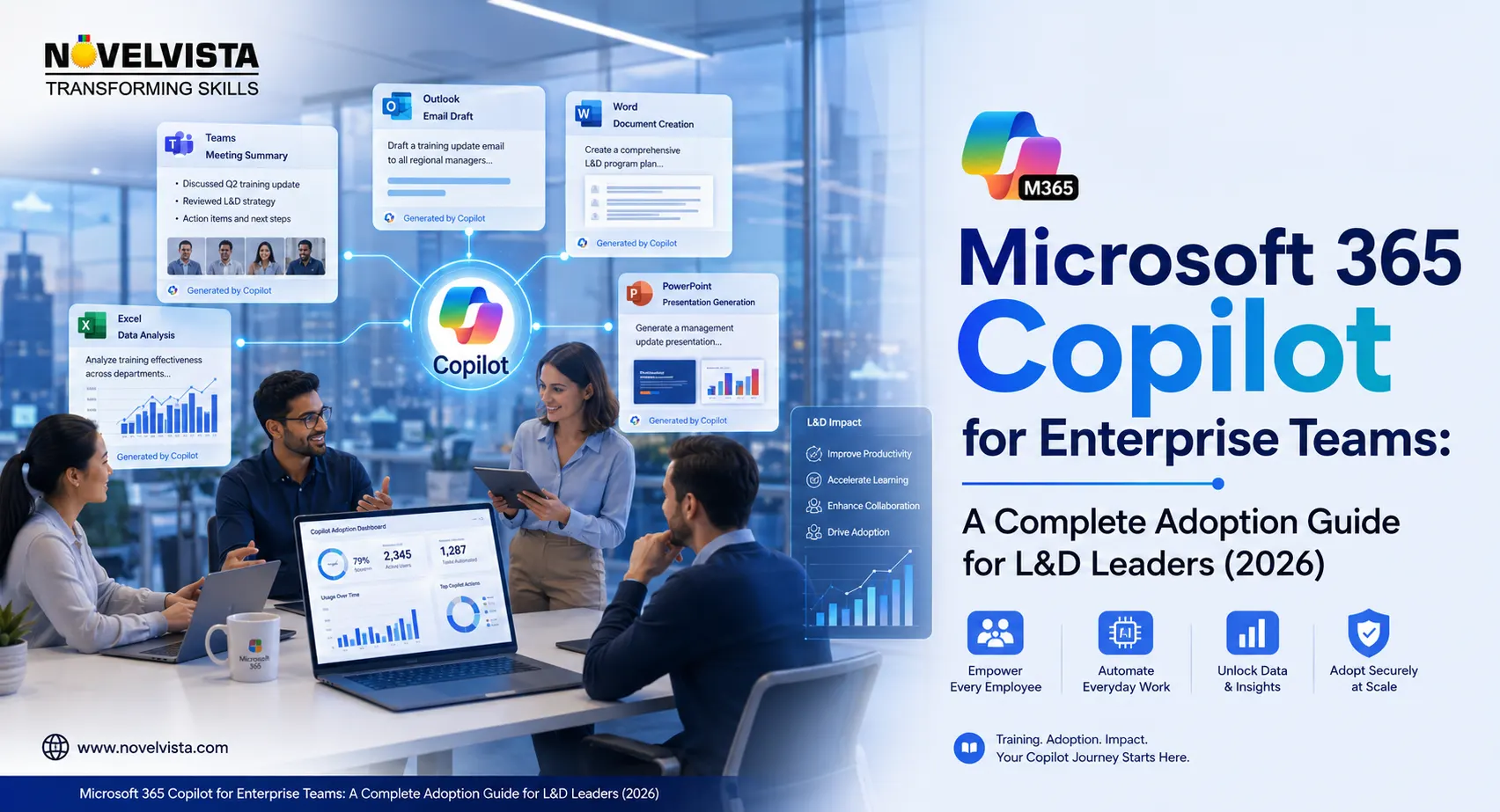
Artificial Intelligence is rapidly transforming enterprise productivity, collaboration, and workplace automation. Organizations across industries are now adopting AI-powered assistants to improve efficiency and streamline workflows. One of the most impactful solutions leading this transformation is Microsoft 365 Copilot for enterprise teams.
This blog explores how enterprises can successfully adopt Microsoft Copilot, the role of Learning and Development leaders in enterprise AI transformation, common implementation challenges, governance considerations, employee enablement strategies, and how structured training programs can maximize business outcomes in 2026.
Microsoft 365 Copilot for enterprise teams is transforming how organizations use Microsoft applications such as Teams, Outlook, Word, Excel, and PowerPoint. Instead of manually handling repetitive tasks, employees can now use AI-assisted workflows for summarization, content creation, meeting management, reporting, and collaboration.
Enterprises are increasingly adopting Copilot because it helps:
As AI adoption grows, Microsoft 365 Copilot for enterprise teams is becoming a strategic productivity platform rather than just another software add-on.
L&D leaders play a critical role in ensuring successful AI adoption. Simply enabling licenses does not guarantee usage or productivity improvements.
A successful M365 Copilot adoption guide should focus on:
Organizations implementing Microsoft 365 Copilot for enterprise teams must prepare employees to understand not only how to use the tool but also when to use it effectively.
| Department | Common Copilot Use Cases |
|---|---|
| Human Resources | Policy drafting, onboarding summaries, employee communication |
| Sales | Meeting summaries, proposal generation, CRM insights |
| Marketing | Campaign content creation, presentation drafting, reporting |
| Finance | Data analysis, report summarization, forecasting assistance |
| Project Management | Task tracking, meeting recap generation, workflow summaries |
These practical applications demonstrate why Microsoft 365 Copilot for enterprise teams is gaining attention across industries.
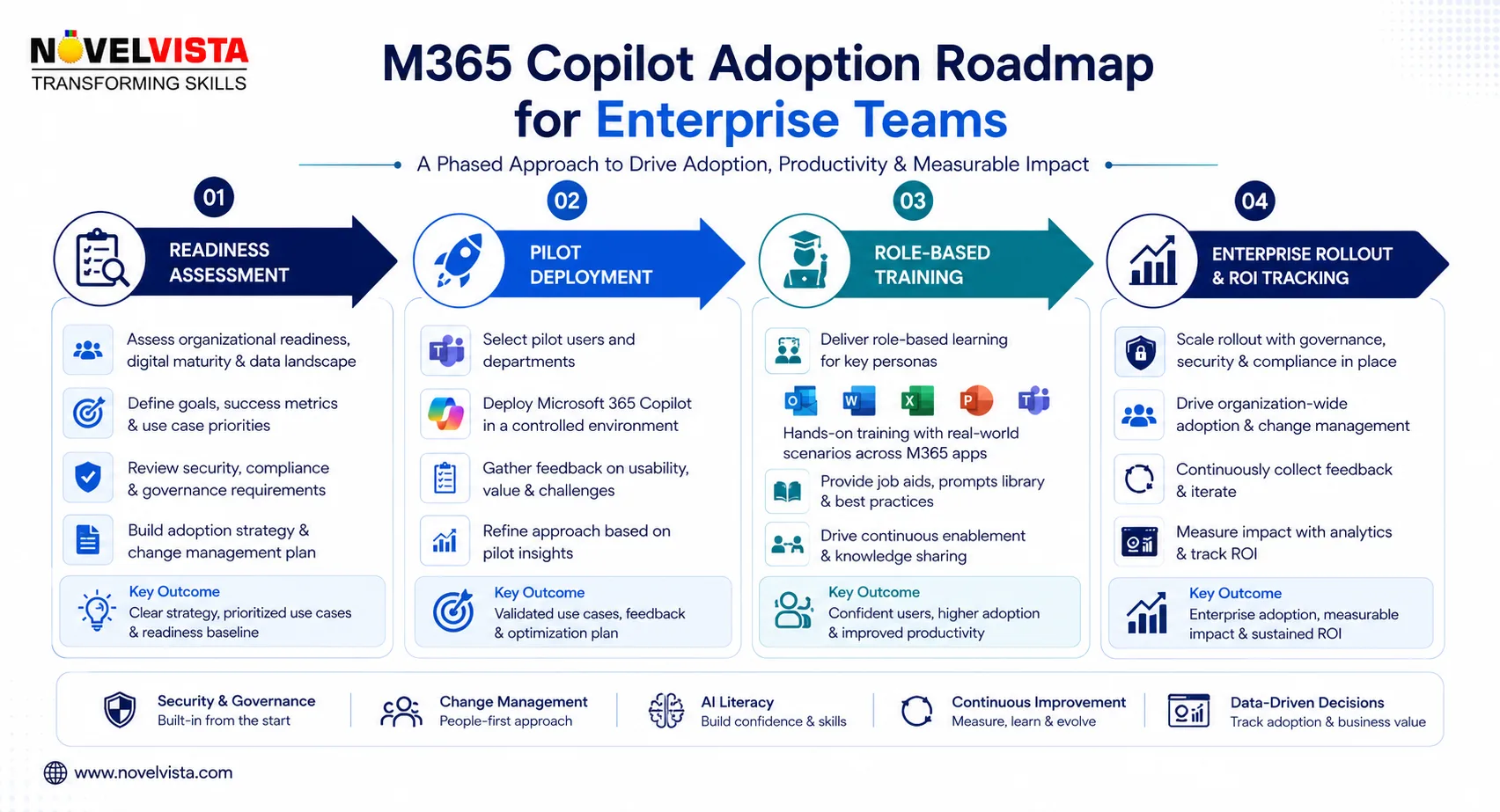
An enterprise rollout should follow a phased implementation strategy.
A successful M365 Copilot adoption guide should include continuous support and AI governance updates.
Without proper enablement, organizations risk underutilizing their AI investment.
Microsoft Copilot corporate training helps employees:
Many enterprises now consider Microsoft Copilot corporate training a mandatory part of digital transformation programs.
Companies looking for enterprise-grade enablement are increasingly exploring Copilot for Microsoft 365 training India programs to support large-scale workforce transformation.
Effective Microsoft Copilot end user training should be practical, role-specific, and hands-on.
| Training Component | Purpose |
|---|---|
| Prompt Engineering | Improve AI interaction quality |
| Use-Case Workshops | Demonstrate department-specific workflows |
| Security Awareness | Reduce compliance risks |
| Hands-On Labs | Build real-world confidence |
| Productivity Scenarios | Show measurable business impact |
Organizations investing in Microsoft Copilot end user training typically achieve higher adoption rates and faster ROI realization.
Before implementing Microsoft 365 Copilot for enterprise teams, enterprises must establish clear governance frameworks.
Important governance areas include:
Strong governance ensures that Microsoft 365 Copilot for enterprise teams aligns with organizational compliance and security standards.
Organizations should track measurable outcomes after deployment.
Key KPIs include:
With the right M365 Copilot training course, enterprises can significantly improve user adoption and maximize ROI.
The future of workplace productivity is increasingly AI-driven, and Microsoft 365 Copilot for enterprise teams is leading this transformation across global organizations. However, successful adoption requires more than just technology deployment. Enterprises need structured governance, role-based enablement, employee readiness programs, and continuous learning strategies.
For Learning and Development leaders, the opportunity is clear: organizations that invest early in AI literacy and workforce enablement will gain significant competitive advantages in productivity, collaboration, and operational efficiency.
If your organization is planning enterprise AI adoption, enrolling teams in NovelVista’s Microsoft Copilot for Microsoft 365 Training Program can help employees confidently use Copilot tools, improve productivity, and accelerate enterprise AI transformation.
Author Details

Confused About Certification?
Get Free Consultation Call
Stay ahead of the curve by tapping into the latest emerging trends and transforming your subscription into a powerful resource. Maximize every feature, unlock exclusive benefits, and ensure you're always one step ahead in your journey to success.