Category | CLOUD and AWS
Last Updated On 27/05/2026
Cloud computing has revolutionized the way modern businesses build, scale, and innovate but it has also introduced a new and often underestimated challenge: controlling cloud costs. Recent studies reveal that nearly 30–32% of cloud spending is wasted, not due to lack of investment, but due to poor visibility, inefficient resource usage, and missed optimization opportunities.
If you're working with AWS, this probably sounds familiar. Your infrastructure is running smoothly but your bills keep climbing. Naturally, questions start to surface:
These are not just operational concerns they are strategic ones.
This guide is designed for IT professionals, cloud architects, DevOps engineers, and decision-makers who want to take control of their cloud spending. Whether you're in the early stages of cloud adoption or managing complex, enterprise-scale environments, mastering AWS cost optimization is essential for sustainable growth.
In this blog, we’ll go beyond the basics and explore practical strategies, modern tools, and proven best practices to help you optimize your cloud investments, strengthen your AWS cloud financial management, and turn cost efficiency into a competitive advantage.
AWS cost optimization is the process of reducing your cloud expenses while maintaining performance, reliability, and scalability. It’s not just about cutting costs it’s about spending smarter.
At its core, it aligns with AWS cloud financial management, where organizations continuously monitor, analyze, and optimize their cloud usage.
Effective AWS cost optimization helps you:
Without a proper strategy, cloud costs can quickly spiral out of control.
To effectively implement AWS cost optimization, you must first understand the AWS pricing models 2026. AWS offers multiple pricing options, each designed for different workloads.
Choosing the right pricing model is one of the most impactful steps in AWS cost optimization.
Pro Tip: Don’t overlook processor choice switching from traditional Intel/AMD instances to AWS Graviton processors can deliver up to 40% better price-performance. This has emerged as a top-tier AWS cost optimization strategy in 2026, helping architects significantly reduce AWS bill while improving efficiency.
A common confusion in AWS cost optimization is choosing between AWS savings plans vs reserved instances.
Feature | Savings Plans | Reserved Instances |
Flexibility | High | Low |
Service Coverage | Multiple services | Specific instance |
Commitment | Usage-based | Instance-based |
Cost Savings | High | High |
Note: While both options offer strong cost savings, there’s an important difference in flexibility and risk. Standard Reserved Instances can be sold on the AWS Reserved Instance Marketplace if your requirements change, allowing you to recover some costs. In contrast, Savings Plans are a fixed commitment with no resale option, making them less flexible but easier to manage. Understanding this trade-off is key to making the right AWS cost optimization decision.
Understanding AWS savings plans vs reserved instances ensures you don’t overpay for resources you don’t fully utilize.
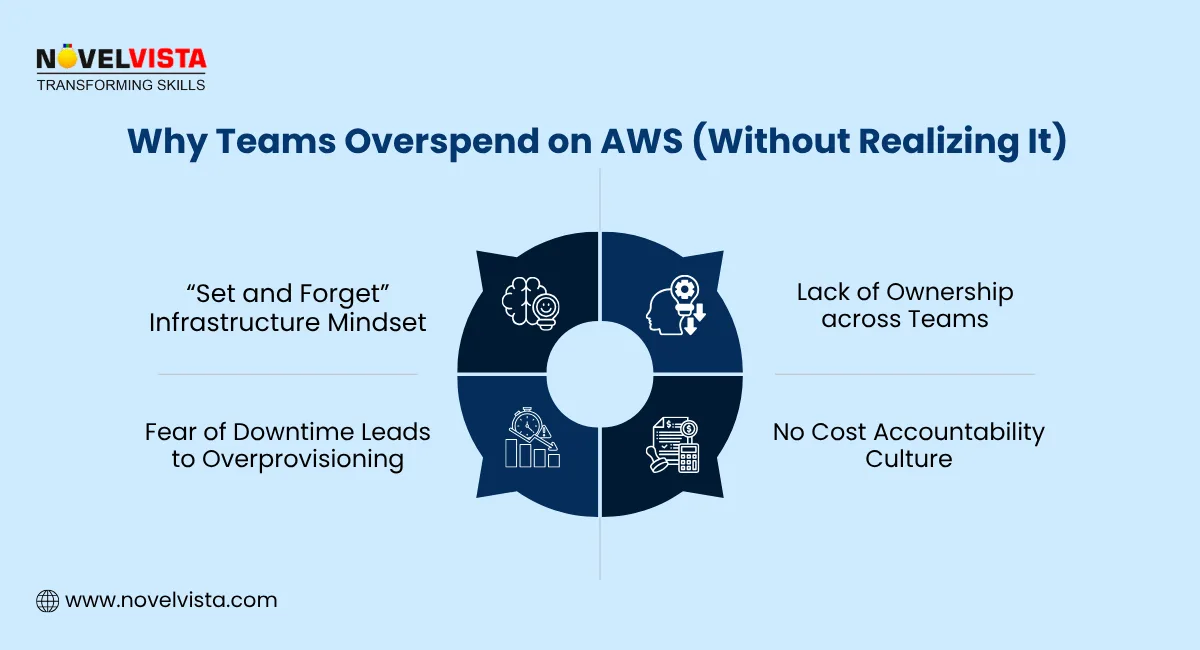
Before you can reduce AWS bill, you need to identify the root causes.
1. Idle Resources
Unused EC2 instances, unattached storage volumes, and idle databases continue running in the background, quietly adding to your AWS bill. These resources often go unnoticed, especially in large environments, making them one of the biggest contributors to cloud waste.
2. Overprovisioning
Allocating more compute, memory, or storage than your workloads actually require leads to unnecessary spending. This often happens due to uncertainty or fear of performance issues, but without regular rightsizing, it directly impacts effective AWS cost optimization.
3. Data Transfer Costs
Inter-region and cross-zone data transfers can significantly increase your bill, especially for distributed architectures. Many organizations overlook these charges, but frequent data movement across regions can quickly become a major cost driver.
4. Lack of Visibility
Without proper monitoring and reporting tools, it becomes difficult to track where your cloud budget is being spent. Limited visibility prevents informed decision-making, making it harder to identify cost-saving opportunities and reduce AWS bill efficiently.
5. Public IPv4 Costs
AWS now charges for all public IPv4 addresses even when they are attached to running instances making them an often overlooked cost factor. To optimize costs, regularly audit your Elastic IP usage and consider migrating to IPv6 or using private IP addresses wherever possible to eliminate this hidden fee and support better AWS cost optimization.
Recognizing these issues is the first step toward effective AWS cost optimization.
Now let’s explore actionable techniques to implement AWS cost optimization effectively.
Analyze usage patterns and adjust instance sizes accordingly. Many organizations overestimate their needs.
Automatically scale resources based on demand to avoid overprovisioning.
Leverage Spot Instances for non-critical workloads to significantly reduce AWS bill.
Move infrequently accessed data to cheaper storage tiers and regularly delete unused volumes to avoid unnecessary charges. For smarter automation, leverage S3 Intelligent-Tiering, which automatically moves data to the most cost-effective storage tier based on access patterns without any manual intervention or performance impact. This makes it a powerful and effortless way to support ongoing AWS cost optimization while ensuring efficient storage management.
Tag resources for better cost allocation and tracking.
These strategies form the foundation of AWS cost optimization and can deliver immediate savings. If you’re planning long-term cloud success, following a well-structured AWS Certification Roadmap can help you build the right skills while mastering cost-efficient and scalable cloud practices.
Modern organizations rely on AWS FinOps tools to manage cloud spending effectively.
They are platforms that help monitor, analyze, and optimize cloud costs in real time.
Key Benefits
Popular Capabilities
By leveraging AWS FinOps tools, businesses can bring financial accountability to cloud operations.
To successfully reduce AWS bill, consistency is key.
1. Set Budget Alerts
Track your cloud spending in real time and receive notifications when predefined thresholds are exceeded. This helps you take immediate corrective action, ensuring you stay within budget and support ongoing AWS cost optimization efforts.
2. Use Cost Allocation Tags
Assign tags to resources to clearly identify which teams, projects, or departments are consuming AWS services. This improves cost visibility, accountability, and enables better decision-making to reduce AWS bill effectively.
3. Regular Audits
Continuously review your infrastructure to identify unused, underutilized, or misconfigured resources. Regular audits ensure that inefficiencies are quickly addressed, helping maintain consistent AWS cost optimization over time.
4. Adopt a FinOps Culture
Encourage collaboration between finance, IT, and operations teams to create shared ownership of cloud costs. A strong FinOps culture enhances AWS cloud financial management and drives smarter, data-driven spending decisions.
Pro Tip: Instance Scheduling
Use AWS Instance Scheduler to automatically shut down non-production environments such as Dev and Test during off-hours (nights and weekends). This simple yet powerful practice can save up to 70% on those specific instances, making it a highly effective AWS cost optimization strategy to reduce AWS bill without impacting production workloads.
These best practices ensure long-term AWS cost optimization success.
Pro Tip: If you're evaluating the financial benefits of cloud expertise, an AWS Certification Salary Guide can give you clear insights into earning potential and career growth in the AWS ecosystem.
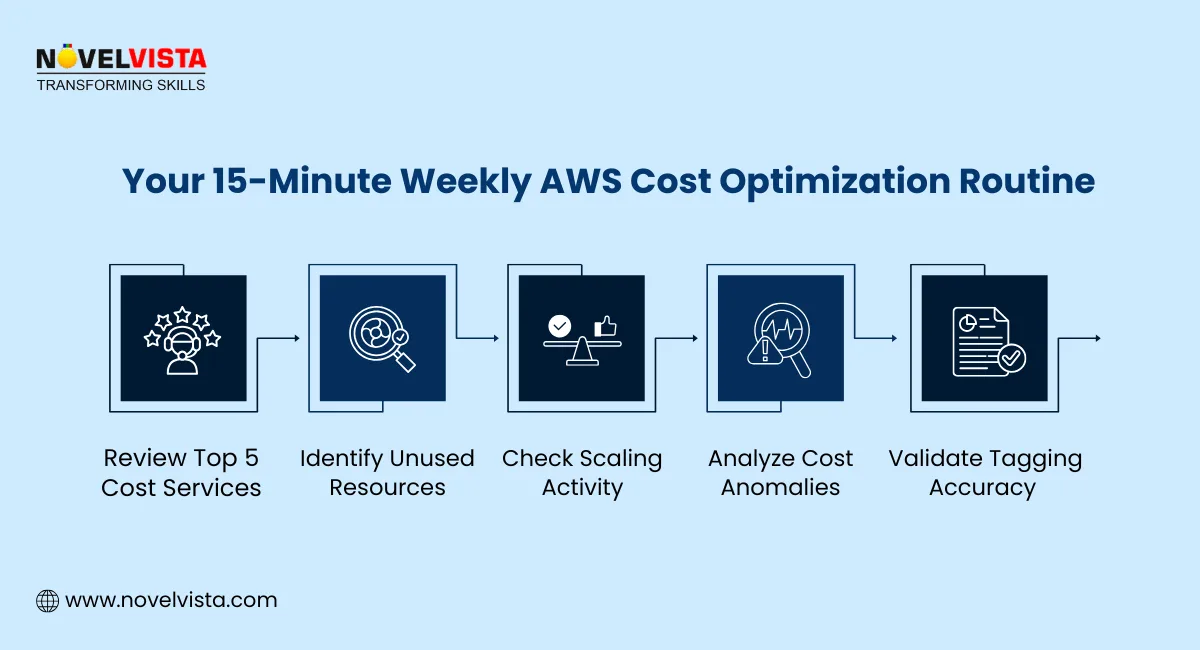
Consider a mid-sized SaaS company experiencing rising AWS costs. After implementing AWS cost optimization strategies:
The result?
They managed to reduce AWS bill by nearly 40% within six months.
This demonstrates how a structured approach to AWS cloud financial management can drive significant savings.
In today’s cloud-first world, managing costs is no longer a secondary task it’s a business-critical priority. As cloud environments grow more dynamic and complex, AWS cost optimization becomes essential for ensuring long-term financial efficiency and operational control.
Organizations that truly succeed in the cloud are not just those that scale fast, but those that scale smart. By deeply understanding AWS pricing models 2026, making the right choice between AWS savings plans vs reserved instances, and leveraging powerful AWS FinOps tools, businesses can transform cloud spending from a challenge into a strategic advantage.
If your objective is to reduce AWS bill without sacrificing performance, reliability, or scalability, the answer lies in continuous optimization. This means regularly analyzing usage, aligning resources with actual demand, and embedding a strong FinOps culture across teams.
The reality is simple cloud costs don’t optimize themselves. The sooner you take a proactive approach to AWS cloud financial management, the faster you unlock efficiency, control, and measurable savings. Because in the cloud, every unused resource isn’t just waste it’s an opportunity lost.
Ready to take control of your cloud costs and advance your AWS expertise?
Join NovelVista’s AWS Solutions Architect – Associate Certification Training and gain hands-on experience in designing cost-efficient, scalable cloud architectures. Learn practical strategies for AWS cost optimization, understand real-world implementation of AWS pricing models 2026, and build the skills needed to reduce AWS bill effectively. Designed for cloud professionals and aspiring architects, this course equips you with industry-relevant knowledge and globally recognized credentials.
Start your AWS certification journey today!

Author Details

Confused About Certification?
Get Free Consultation Call
Stay ahead of the curve by tapping into the latest emerging trends and transforming your subscription into a powerful resource. Maximize every feature, unlock exclusive benefits, and ensure you're always one step ahead in your journey to success.