Category | AI And ML
Last Updated On 16/01/2026
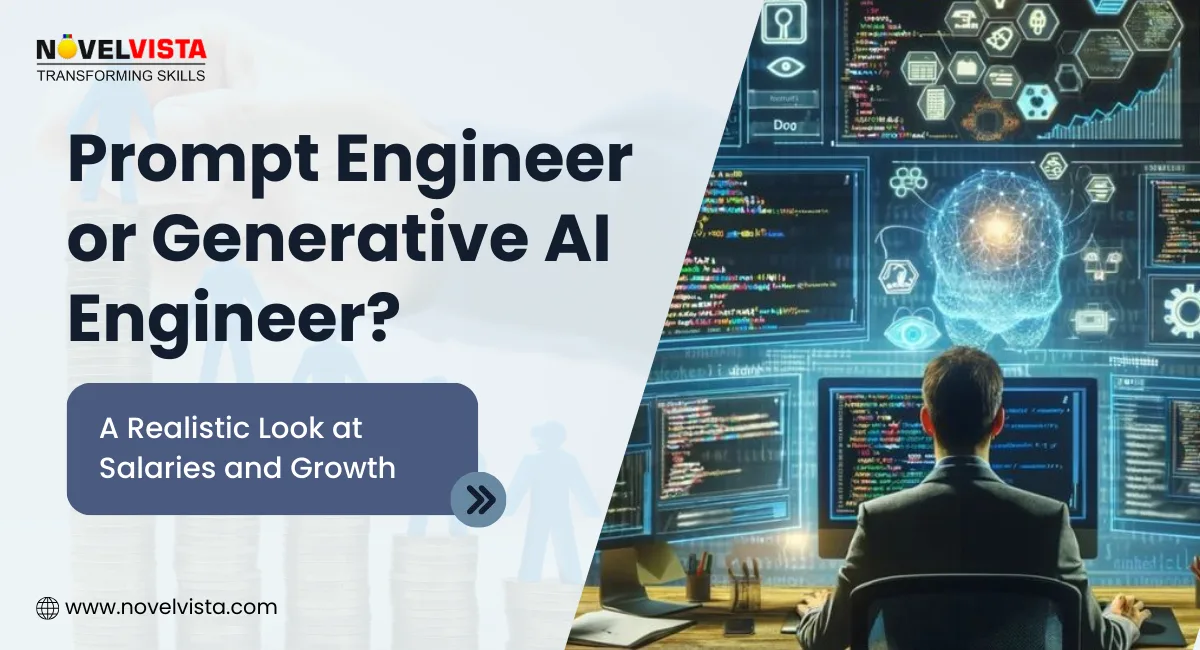
The AI job market has expanded faster than most professionals anticipated. Global workforce data shows AI-related roles growing at over 30–40% year on year, with organizations steadily increasing budgets for AI talent. Salaries, however, are not rising uniformly across all roles. Instead, compensation reflects where value is created—whether at the system level or the interaction level.
This is why the Generative AI Engineer vs Prompt Engineer Salary discussion has become so prominent. Both roles work closely with large language models and generative systems, yet their responsibilities, expectations, and long-term earning patterns differ significantly.
Professionals evaluating AI careers often ask:
Are prompt engineers really earning more than engineers?
Does deeper technical ownership lead to better pay?
How does this AI career salary comparison look when grounded in real hiring data rather than social media narratives?
To answer these questions, we need to understand how these roles fit into modern AI teams.
AI adoption has moved beyond experimentation. Companies are deploying AI into customer-facing products, internal platforms, and decision-making systems. As a result, AI job roles and salary structures now reflect operational impact rather than novelty.
Roles responsible for scalability, reliability, compliance, and cost control tend to command stronger and more stable compensation. Roles focused on optimization and interaction design often offer faster entry but a different growth curve.
This distinction becomes clearer when comparing Generative AI Engineer vs Prompt Engineer roles directly.
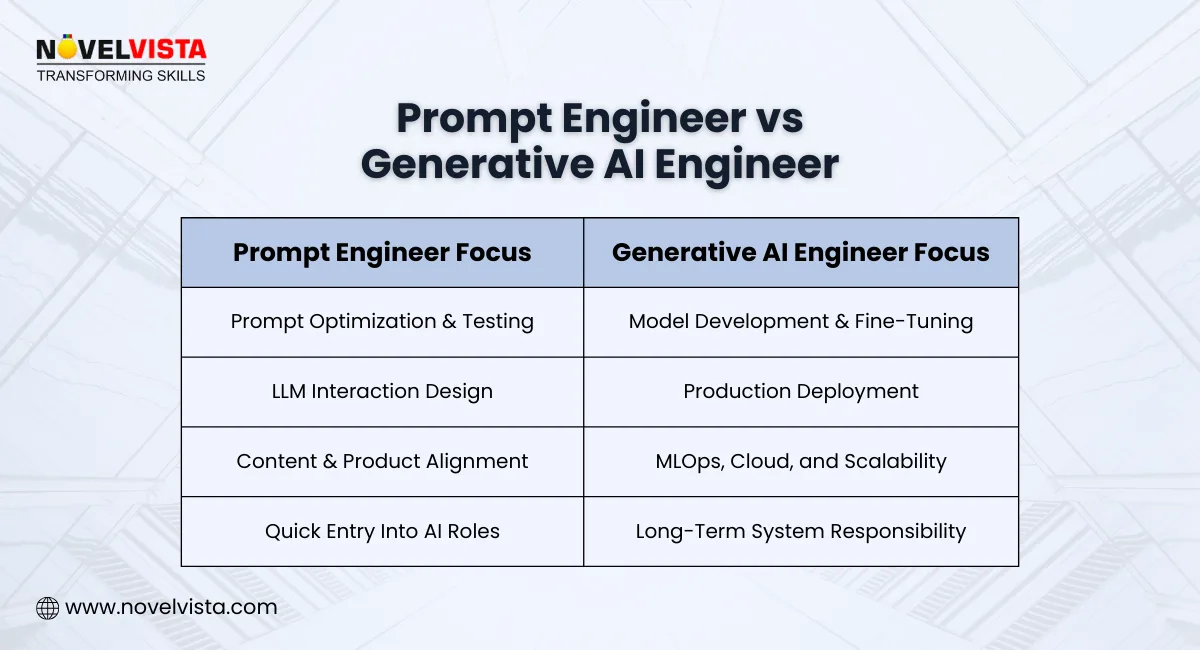
A Generative AI Engineer works at the model and system level. Their role involves designing, adapting, and deploying generative models into production environments where performance and reliability matter.
Common responsibilities include:
Because these responsibilities affect long-term system performance, Generative AI Engineer salary trends align closely with senior software and machine learning engineering roles.
Prompt engineers focus on how models are guided to produce useful outputs. Their work centers on prompt design, testing, and refinement to improve response quality and consistency.
Typical responsibilities include:
Understand the real career paths of Prompt Engineers and Generative AI Engineers
Learn how skills, responsibilities, and growth differ across AI roles
Make confident, future-ready decisions for your generative AI career
The primary difference lies in ownership. Generative AI engineers own systems and outcomes over time, while prompt engineers focus on interaction quality within defined constraints.
This difference explains why compensation evolves differently across these roles, as reflected in real salary data. Also generative AI for developers equips developers with the skills to build smarter AI systems efficiently.
Based on reported ranges from established hiring platforms, the table below shows how compensation differs globally across experience levels.
Experience Level |
Generative AI Engineer Salary |
Prompt Engineer Salary |
Entry-Level (0–2 years) |
$83k–$151k |
$63k–$95k |
Mid-Level (3–5 years) |
$120k–$160k |
$90k–$180k |
Senior Level (6+ years) |
$160k–$215k+ |
$120k–$270k+ |
Lead / Contract Roles |
$190k–$230k+ |
$110k–$250k+ |
This Generative AI Engineer vs Prompt Engineer salary comparison highlights an important pattern: generative AI engineering salaries scale steadily with responsibility, while prompt engineering compensation varies more widely depending on contracts, specialization, and short-term demand.
While global figures dominate most online discussions, the Indian market shows its own clear salary dynamics. Compensation reflects company type, city, and whether roles are tied to global products or local delivery teams. Understanding the Generative AI Ecosystem is key for professionals to navigate roles from prompt engineering to system-level AI deployment and make informed career decisions.
(Annual CTC in INR)
Experience Level |
Generative AI Engineer Salary |
Prompt Engineer Salary |
Entry-Level (0–2 years) |
₹8–15 LPA |
₹6–10 LPA |
Mid-Level (3–5 years) |
₹15–35 LPA |
₹12–25 LPA |
Senior Level (6+ years) |
₹30–70 LPA+ |
₹20–60 LPA+ |
Lead / Contract Roles |
₹45–100 LPA+ |
₹25–60 LPA+ |
In India, the same pattern holds true as seen globally. Generative AI Engineer salary growth is closely tied to system ownership, production deployment, and alignment with global engineering teams. Prompt Engineer salary can be strong, particularly in senior or contract roles, but is often linked to hybrid responsibilities rather than standalone positions.
Prompt engineering emerged rapidly, and salary ranges reflect that early volatility. Senior prompt engineers or consultants with strong domain expertise can command high compensation, especially on short-term engagements.
However, many organizations now treat prompt engineering as a capability embedded within broader roles, which naturally affects long-term salary progression.
Generative AI engineers are increasingly part of core engineering teams. Their work impacts system stability, compliance, scalability, and cost efficiency—areas companies invest in consistently.
As a result, Generative AI Engineer salary progression tends to be more predictable and aligned with long-term technical leadership tracks. For professionals aiming to move beyond engineering and prompt optimization, transitioning into a role as a Generative AI Strategist offers the opportunity to shape AI initiatives, guide organizational AI adoption, and influence long-term business impact.
This AI career salary comparison reveals a trade-off. Prompt engineering offers faster entry and, in some cases, high short-term earnings. Generative AI engineering requires deeper preparation but delivers compounding career value over time.
Understanding this distinction helps professionals make decisions based on sustainability, not just current salary figures.
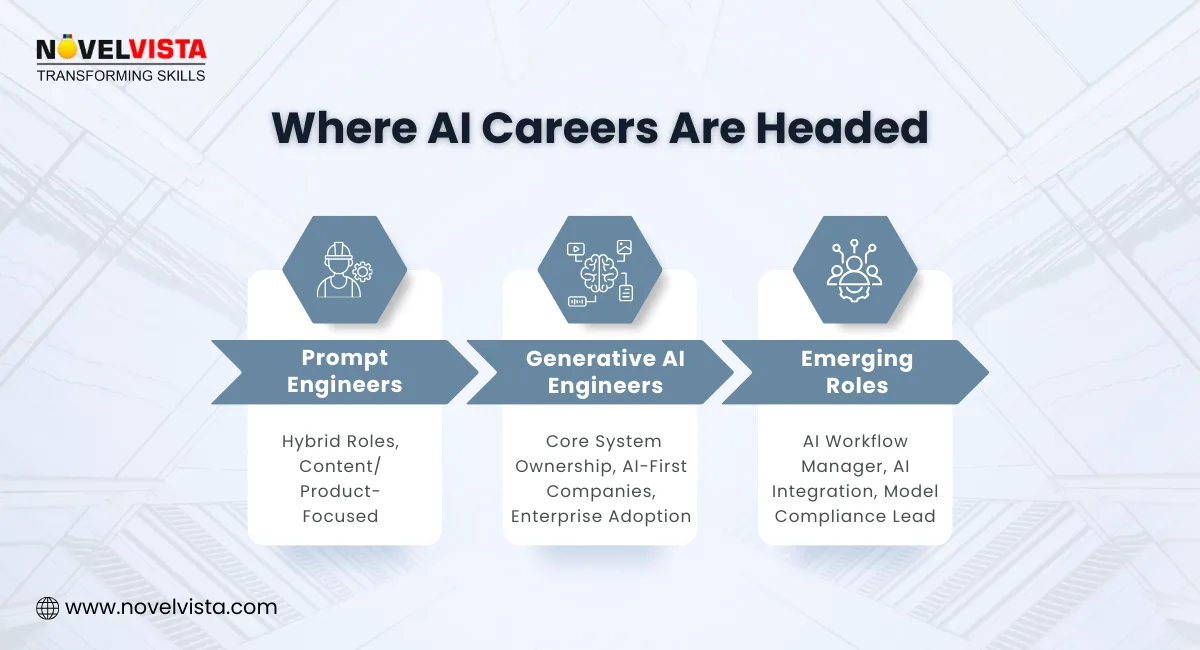
Hiring trends suggest prompt engineering will continue, but increasingly as part of hybrid roles across product, analytics, and AI operations. Generative AI engineering roles, meanwhile, are becoming more standardized across industries.
This evolution reinforces existing Generative AI Engineer vs Prompt Engineer salary trends rather than reversing them.

The Generative AI Engineer vs Prompt Engineer salary comparison ultimately reflects how organizations assign value. Prompt engineering emphasizes interaction and usability. Generative AI engineering emphasizes systems, scalability, and long-term performance.
The most resilient AI careers are built by aligning skills with real operational responsibility—not just chasing the highest headline numbers.
Ready to accelerate your AI career and master high-demand skills?
Join NovelVista’s Generative AI Professional Training to gain hands-on experience in generative AI model development, prompt engineering, and scalable AI workflows. Or if you are leaning towards Promp Engineering, NovelVista also offers Prompt Engineering Training & Courses. These are designed for AI enthusiasts, software engineers, and data professionals. These courses equip you with practical knowledge and real-world skills to confidently take on advanced AI roles and boost your earning potential.
Start your AI career transformation today!
Author Details

Course Related To This blog
Generative AI Professional
Confused About Certification?
Get Free Consultation Call
Stay ahead of the curve by tapping into the latest emerging trends and transforming your subscription into a powerful resource. Maximize every feature, unlock exclusive benefits, and ensure you're always one step ahead in your journey to success.