Category | AI And ML
Last Updated On 04/12/2025
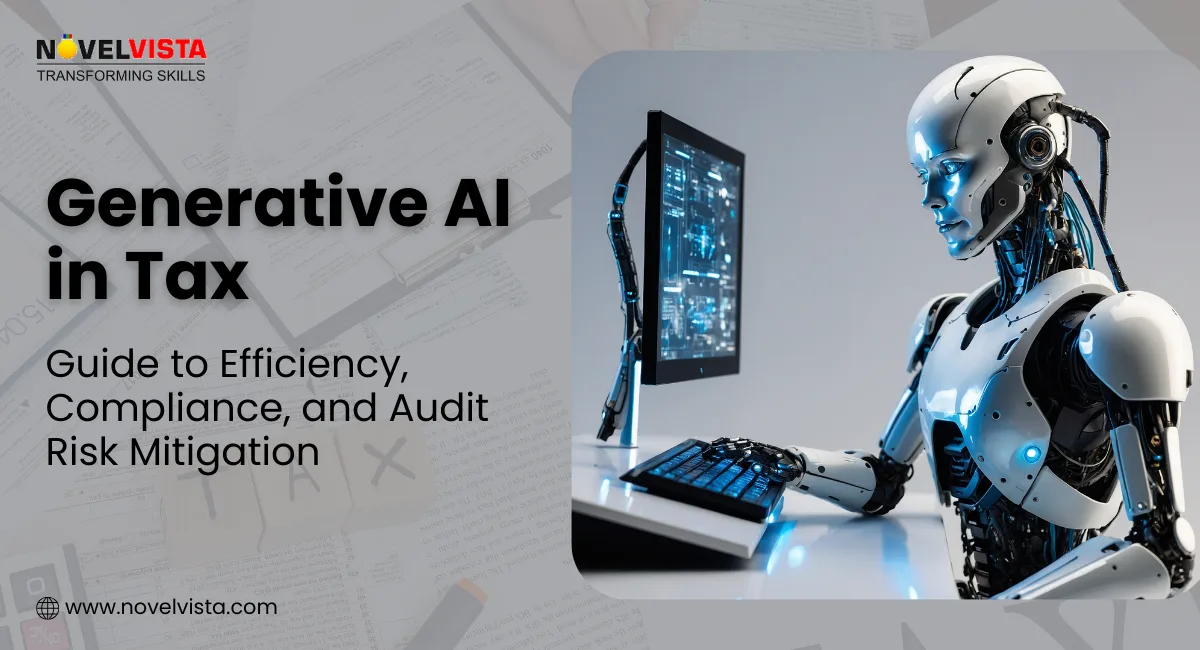
In the last few years, tax and accounting teams have increasingly turned to artificial intelligence to streamline workflows. A recent survey revealed that nearly 42% of finance professionals in the U.S. are already using AI-driven tools for tasks like invoice processing, reconciliation, and tax compliance checks. Among these innovations, generative AI in tax has emerged as a transformative force, helping teams handle complex data, reduce errors, and improve documentation efficiency.
If you’re a CPA, a corporate finance professional, a small business owner, or even a freelancer managing your own taxes, understanding how generative AI in tax tools work can significantly improve accuracy and save time. But what does this actually mean in day-to-day tax operations? How is it changing compliance and reporting without relying on futuristic predictions? Let’s explore the practical impact of generative AI on tax preparation and compliance.
Tax preparation and compliance remain detail-intensive tasks. In most organizations, the process involves:
Despite advances in accounting software, manual processes continue to dominate many areas. Errors in document entry or misclassification of expenses can result in delays, penalties, or audits. For large corporations, managing multiple jurisdictions and regulatory requirements adds another layer of complexity.
This is where tax compliance automation and generative AI for tax step in, offering practical solutions to reduce repetitive tasks, improve accuracy, and make compliance checks more manageable.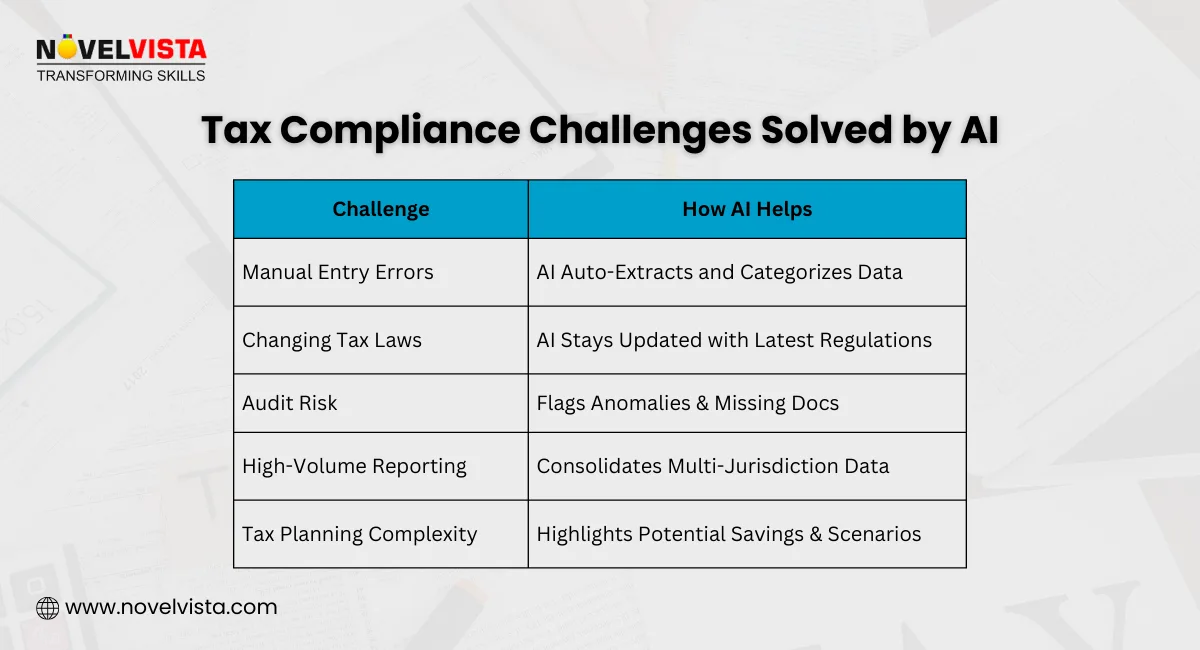
Generative AI in tax refers to artificial intelligence tools that can process, analyze, and interpret large volumes of tax-related data. Unlike traditional automation, which executes predefined rules, generative AI can:
For instance, an AI system can scan hundreds of expense reports, identify unusual entries, and highlight them for review — significantly reducing the chance of errors. Tools focused on generative AI and tax documentation also generate structured reports and ensure compliance with statutory requirements. Combined, these capabilities make generative AI tax preparation more reliable and efficient than manual processes. As these improvements reshape daily tax operations, the key features of generative AI make it clear why finance teams are increasingly relying on intelligent tools to streamline compliance and preparation.
Processing receipts, invoices, bank statements, and expense reports manually is time-consuming. Many accounting platforms now incorporate generative AI tax preparation features that automatically read, classify, and organize financial documents. This reduces manual work and frees up professionals to focus on reviewing and analyzing data rather than entering it.
Generative AI for tax compliance can cross-check transactions against applicable tax laws and corporate policies. By automating these checks, teams reduce errors and ensure filings are consistent with regulations. This kind of tax compliance automation is particularly useful for organizations with high transaction volumes, where manual verification would be slow and error-prone.
One of the major advantages of AI tools is reducing the likelihood of mistakes that trigger IRS audits. With tax audit risk with Generative AI, professionals can flag discrepancies early, identify missing supporting documents, and verify calculations. Many systems now provide alerts for unusual entries or potential compliance violations, addressing concerns related to AI and IRS audit risk.
For multinational corporations or organizations operating across several jurisdictions, tax compliance can be daunting. Generative AI in corporate tax management market tools help by consolidating data from multiple sources, applying jurisdiction-specific rules, and preparing standardized reports for internal and regulatory review. This streamlines processes that previously required large teams and significant time investment.
Beyond preparation and compliance, generative AI tax planning tools assist teams in evaluating potential tax scenarios. For example, AI can summarize the financial impact of different strategies, highlight tax-saving opportunities, and compare the outcomes of alternative decisions. While human judgment remains essential, these tools provide actionable insights efficiently.
CPA firms are seeing shifts in daily workflows. Routine data entry is increasingly handled by AI, allowing accountants to focus on advisory services, compliance strategy, and client consultation. The future of CPA firms with AI will likely involve hybrid models where AI handles repetitive tasks while professionals provide expertise on interpretation, planning, and risk mitigation.
While AI adoption is still evolving, the future of tax preparation with AI is grounded in practical improvements:
Faster, more accurate document processing
Reduced compliance errors
Simplified corporate tax reporting
Enhanced decision-making for planning and risk management
These improvements are already being observed in firms and tax departments using AI-powered platforms today, without requiring speculative assumptions about future capabilities. As AI in finance continues to strengthen everyday workflows, these advancements in tax preparation and compliance show how technology is becoming an essential partner for modern finance teams.
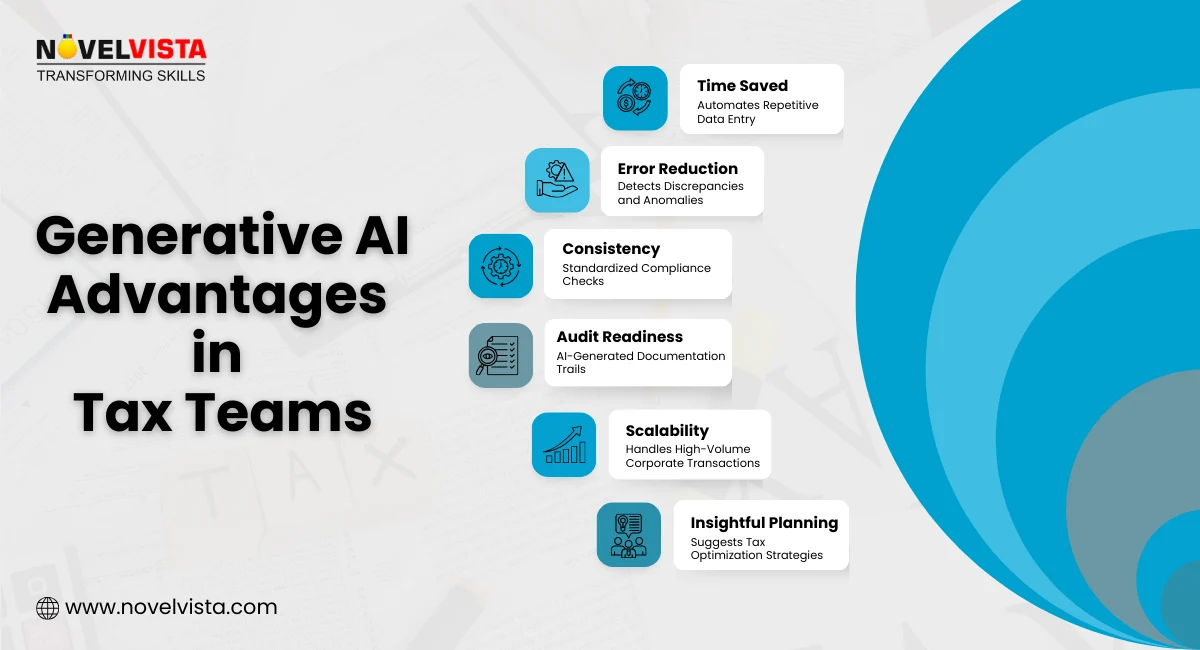
Save Time: Automate repetitive tasks
Reduce Errors: Stay audit-ready
Work Smarter: Streamline compliance
While generative AI is useful, it’s not foolproof:
Maintaining human oversight ensures that these systems augment professional judgment rather than replace it. All these advancements highlight how tax workflows are becoming an integral part of the broader Generative AI ecosystem, where connected tools and smarter automation are transforming everyday financial tasks.
Generative AI in tax is no longer just a concept — it’s an active part of how tax preparation, compliance, and planning are managed in organizations of all sizes. By automating repetitive work, reducing errors, and supporting better documentation, AI tools are helping accountants, CPAs, and business owners work more efficiently while staying compliant. The key to success lies in adopting these technologies responsibly and combining their capabilities with professional expertise.
As adoption continues, the role of AI will expand, but human oversight and judgment will remain critical. Thoughtful integration of generative AI in tax promises smoother workflows, fewer errors, and more reliable compliance for the years ahead.
Ready to take your tax and accounting expertise to the next level? Join NovelVista’s Generative AI Professional Training and Generative AI in Finance and Banking Training Course gain hands-on skills in applying AI for tax preparation, compliance, and corporate planning. This course provides practical insights, real-world use cases, and actionable strategies to automate workflows, reduce errors, and make smarter financial decisions.
Start mastering AI-driven tax solutions today!
Author Details

Course Related To This blog
Generative AI Professional
Generative AI in Project Management
Generative AI in Risk & Compliance
Generative AI in Retail
Generative AI in Marketing
Generative AI in Finance and Banking
Generative AI for HR and L&D
Generative AI in Cybersecurity
Generative AI in Business
Generative AI in Software Development
Confused About Certification?
Get Free Consultation Call
Stay ahead of the curve by tapping into the latest emerging trends and transforming your subscription into a powerful resource. Maximize every feature, unlock exclusive benefits, and ensure you're always one step ahead in your journey to success.