

Certified Cyber Security Foundation Training & Certification Course
This Cyber Security Foundation Certification by NovelVista is designed to help professionals build practical knowledge of cyber threats, risk management, and security controls. This Cyber Security Foundation Course helps you understand how to protect digital assets and support secure business operations.
- Industry Expert Trainers
- Online learning session
- Accredited Trainer
- Exam fee included

Certified Cyber Security Foundation Course Overview
The Cyber Security Foundation Certification is designed to help professionals build practical expertise in cybersecurity principles, threat prevention, and security best practices. This Cyber Security Training focuses on understanding how organizations protect systems, networks, data, and digital operations from evolving cyber risks.
This Cyber Security Course covers key areas such as information risk management, business continuity, network security, cyber security architecture, incident management, compliance, and foundational security controls. Through this Cyber Security Certification Course, learners gain the ability to support secure environments and respond effectively to common security challenges.
Delivered by NovelVista, this Cyber Security Training Certification program follows a practical learning approach with real-world scenarios, case studies, and hands-on exercises. By completing this Cyber Security Foundation Certification, professionals will be prepared to contribute confidently to security-focused teams and advance their careers in modern cybersecurity roles.

What You Will Get?
Learning Outcome
After the completion of the course, the participants would be able to:
Training Calendar
English
- Self paced videos, assessments, recall quizzes, more
- For more details, reach us at training@novelvista.com
Includes Training, Exam & Certification
Lifetime Access
- Self paced videos, assessments, recall quizzes, more
- For more details, reach us at training@novelvista.com
Includes Training, Exam & Certification
Course Curriculum
This Cyber Security Foundation Course is designed to help you build practical knowledge of cybersecurity principles, risk management, resilience, incident response, and secure business operations.
Module 1: Introduction to Cyber Security Management+
Build a strong foundation in cybersecurity concepts, terminology, and the business need for security programs.
- Cyber Security Concepts and Definitions: Learn essential cybersecurity terminology, principles, and core concepts used to protect digital systems, users, and organizational assets.
- Benefits of Cyber Security Programs: Understand how cybersecurity improves trust, resilience, compliance, operational continuity, and protection against modern threats.
- Security Requirements in Organizations: Learn why policies, controls, governance, and accountability are required for effective organizational security management.
- Threat Landscape Overview: Explore common cyber threats, including malware, phishing, insider risks, and unauthorized access attempts.
- Business Value of Security Awareness: Understand how employee awareness supports a stronger defense against human-focused cyber risks.
Module 2: Introduction to Information Risk Management+
Learn how organizations identify, assess, and manage information security risks effectively.
- Information Risk Management Terminology: Learn the meaning of threats, vulnerabilities, likelihood, impact, risk appetite, and treatment options.
- Risk Management in Business Context: Understand how business priorities influence risk decisions, investments, and control implementation strategies.
- Risk Identification Techniques: Learn how organizations discover risks affecting systems, data, people, and third-party relationships.
- Risk Assessment Fundamentals: Explore how likelihood and impact are evaluated to prioritize security risks.
- Risk Treatment and Monitoring: Understand how risks are mitigated, accepted, transferred, or continuously monitored.
Module 3: Introduction to Business Continuity Management+
Build knowledge of continuity planning that helps organizations operate during disruptions.
- Need for Business Continuity Management: Learn why continuity planning is critical during cyber incidents, outages, disasters, and operational disruptions.
- Business Continuity in Organizations: Understand how departments coordinate to maintain critical services during crisis situations.
- Business Continuity Lifecycle: Learn the stages of planning, testing, response, recovery, and continual improvement.
- Disaster Recovery Basics: Explore how technology recovery supports restoration of systems and services after incidents.
- Resilience Planning Practices: Understand how preparedness reduces downtime and business impact.
Module 4: Cyber Security Architecture+
Learn how secure design principles help protect systems, networks, and applications.
- Concepts of Cyber Security Architecture: Learn how security architecture aligns controls, technology, and processes for layered defense.
- Role of a Security Architect: Understand responsibilities for designing secure systems, reviewing risks, and guiding technical teams.
- Security Design Principles: Learn principles such as least privilege, defense in depth, segmentation, and secure defaults.
- Secure Network and System Design: Explore how architecture decisions reduce attack surfaces and improve resilience.
- Integrating Security into Projects: Understand how early security involvement improves delivery outcomes and lowers risk.
Module 5: Soft Skills and Incident Management+
Learn communication, coordination, and response skills required to handle cybersecurity incidents effectively.
- Topics and Learning Outcomes Overview: Understand the core competencies, communication skills, and response capabilities expected in cybersecurity environments.
- Engagement Lifecycle Management: Learn how teams manage communication, coordination, and stakeholder engagement throughout incident handling activities.
- Value of Incident Response to Clients: Understand how structured incident response reduces impact, restores trust, and protects business relationships.
- Awareness of Potential Incidents: Learn how to recognize warning signs, suspicious behavior, and early indicators of security incidents.
- Protocols and Procedures for Response: Explore frameworks, escalation paths, and standard procedures used during incident response operations.
- Understanding Limitations of System Logs: Learn why logs may be incomplete, delayed, or insufficient without proper monitoring strategies.
- Timelines to Analyze Event Data: Understand how time sequencing supports investigations and accurate incident reconstruction.
- Time Zone and Timestamp Challenges: Learn how time zones and timestamp differences affect forensic reviews and cross-border incidents.
Module 6: Law and Compliance+
Build awareness of legal frameworks, regulations, and external coordination relevant to cybersecurity operations.
- Cybersecurity Legal and Regulatory Foundations: Learn why laws and regulations shape acceptable security practices, evidence handling, and accountability.
- Computer Misuse and Unauthorized Access Laws: Understand the legal consequences of hacking, misuse of systems, and unauthorized digital activities.
- Data Protection and Privacy Requirements: Learn how privacy obligations guide responsible handling of personal and sensitive information.
- Human Rights and Ethical Considerations: Explore how surveillance, investigations, and monitoring must balance rights and security needs.
- Engaging Law Enforcement Effectively: Understand when and how organizations coordinate with authorities during serious cyber incidents.
- CERTs and Their Role: Learn how Computer Emergency Response Teams support alerts, coordination, and national incident response.
- Compliance Reporting Expectations: Understand how organizations document incidents, controls, and evidence for regulatory needs.
- Building a Compliance-Aware Security Culture: Learn how awareness and governance reduce violations and strengthen long-term security maturity.
Course Details
What Will You Get?+
This Cyber Security Foundation Certification provides a complete, practical learning experience designed to help you build cybersecurity knowledge and achieve certification with confidence.
- Engaging digital learning videos
- Access to expert-led sessions and case studies
- Downloadable resources and reference templates
- AI-based roleplay and simulation exercises
- Practice exams and mock tests
- Certification exam voucher
- Two exam attempts
- Hands-on learning with real-world scenarios
- Interview preparation support
- Globally recognized certification
Eligibility+
This Cyber Security Foundation Course is designed for professionals who want to build expertise in cybersecurity fundamentals, risk management, and security operations.
- IT professionals and support teams
- Network and system administrators
- Students and fresh graduates interested in cybersecurity careers
- Risk, compliance, and governance professionals
- Helpdesk and technical support professionals
- Managers responsible for digital operations
- Professionals planning a transition into security roles
- Anyone looking to build a career in cybersecurity
Pre-requisites+
There are no strict mandatory requirements for this Cyber Security Foundation Course. However, having basic knowledge will help you learn more effectively.
- Basic understanding of computers and digital systems
- Familiarity with the internet, networks, or IT concepts is helpful
- Basic analytical and problem-solving skills
- Interest in cybersecurity and digital risk management
- Willingness to learn security concepts and best practices
Training Delivery Style+
This Cyber Security Training is delivered in a flexible self-paced format, allowing you to learn at your own pace and convenience.
- Fully self-paced online learning
- Anytime, anywhere access
- Structured digital learning modules
- On-demand expert-led video sessions
- Practice tests and mock exams
- AI-based roleplay and simulations
- Downloadable resources and templates
- Lifetime access to course content
Benefits of This Course+
This Cyber Security Foundation Certification helps you build practical security skills, understand cyber risks, and strengthen your career in modern cybersecurity roles.
- Build Strong Cybersecurity Fundamentals: Learn core security principles, terminology, threats, and controls that form the base of effective cybersecurity practices.
- Understand Common Cyber Threats: Gain awareness of phishing, malware, ransomware, insider threats, and other risks affecting organizations today.
- Improve Risk Management Skills: Learn how to identify vulnerabilities, assess threats, and support risk treatment decisions in business environments.
- Strengthen Incident Response Knowledge: Understand how incidents are detected, reported, investigated, and managed to reduce operational impact.
- Learn Security Architecture Basics: Build knowledge of secure design principles that help protect systems, networks, and applications.
- Enhance Business Continuity Awareness: Understand how resilience planning and recovery strategies help organizations continue operations during disruptions.
- Gain Compliance and Legal Awareness: Learn the importance of regulations, privacy obligations, governance, and security accountability practices.
- Increase Career Opportunities: Strengthen your professional profile for entry-level and foundational roles in cybersecurity and IT security teams.
- Prepare for Advanced Security Certifications: Create a strong base for future learning in ethical hacking, security operations, governance, and specialized security domains.
- Earn a Globally Recognized Certification: Validate your expertise with a certification that demonstrates foundational cybersecurity knowledge and practical awareness.
Certified Cyber Security Foundation
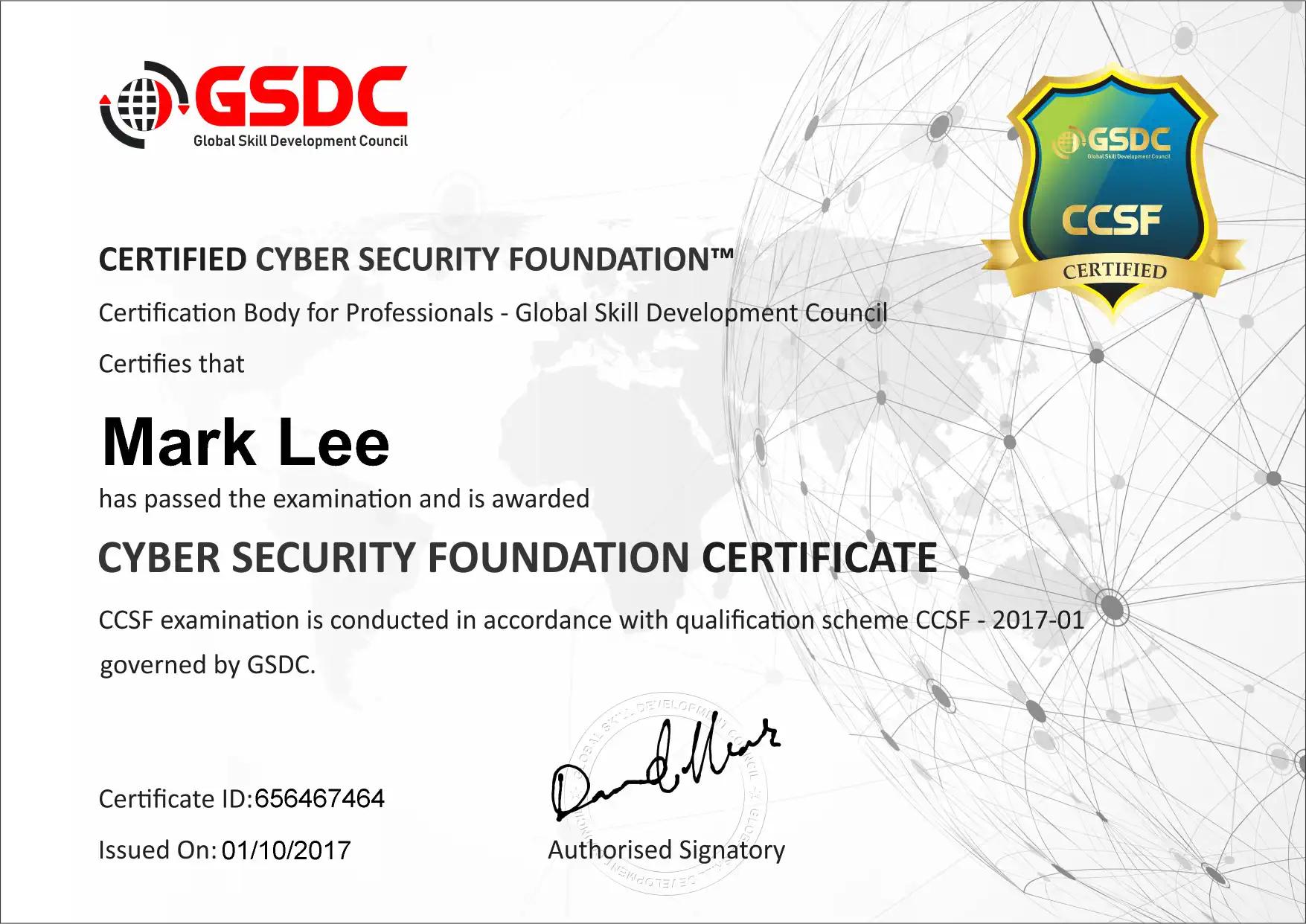
Exam Format - Objective Type, Multiple Choice
Exam Duration - 1 Hour
No. of Questions - 40 (multiple-choice questions)
Passing marks: 26 out of 40 (65%)
Certificate - Within 5 business days
Result - Immediately after the exam
Closed book