

ITIL Experience (Version 5) Certification Course | ITIL Experience (Version 5) Training Program
Our ITIL Experience (Version 5) Certification Training Course helps professionals master experience-led service management by focusing on human perception, digital interactions, and trust-driven value creation. With exam-aligned preparation, real-world service journey insights, and expert-led sessions, you’ll be fully equipped to design, measure, and improve service experiences in modern digital environments.
- Industry Expert Trainers
- ITIL® 5 Aligned Curriculum
- Practical Experience Design Approach
- Live Online Instructor-Led Training

ITIL Experience (Version 5) Certification Course Overview
The ITIL Experience (Version 5) Certification Course is designed to help professionals build practical expertise in understanding, designing, and improving experiences across digital products and services. The program focuses on human perception, emotional responses, stakeholder expectations, and trust-driven value creation, enabling learners to effectively manage experience-led services in today’s digital-first environments. This ITIL Experience (Version 5) Training covers key areas such as experience as a human response, digital experience and its value, stakeholder perspectives, service lifecycle interactions, experience drivers, and experience measurement. It also explores critical concepts like trustworthiness, coherence, continual experience improvement, and the impact of AI on service perception and trust. Through this course, learners gain the ability to align service management practices with real human responses, enhance engagement, and deliver meaningful experience outcomes.
Delivered by NovelVista and aligned with PeopleCert standards, the training combines structured learning, practical insights, and focused exam preparation to help you stay on track. By completing the ITIL Experience (Version 5) Certification, professionals will be able to design experience-led services, improve stakeholder satisfaction, strengthen trust in digital interactions, and take on more strategic roles

What You Will Get?

Learning Outcome
After the completion of the course, the participants would be able to:
Training Calendar
English
- Self paced videos, assessments, recall quizzes, more
- For more details, reach us at training@novelvista.com
Includes Training, Exam & Certification
Lifetime Access
- Self paced videos, assessments, recall quizzes, more
- For more details, reach us at training@novelvista.com
Includes Training, Exam & Certification
ITIL Experience (Version 5) Course Curriculum
This ITIL Experience (Version 5) Certification Course follows a structured learning path that builds your ability to design, measure, and improve experience-led services across digital environments. The curriculum combines human-centered design principles, service lifecycle insights, and exam-focused concepts to help professionals apply experience management practices effectively in real-world scenarios.
Module 1: Experience as Human Response+
This module builds your foundation in understanding how human perception shapes service experience and value.
Experience Formation:
Learn how experience emerges from anticipation, perception, and evaluation, influencing engagement, trust, and value co-creation over time.
Module 2: Digital Experience and Its Value+
This module focuses on how digital interactions shape user perception and organizational outcomes.
Understanding Digital Experience:
Explore how thoughts, emotions, and behavioral responses are formed during interactions with digital products and services.
Value and Trust Impact:
Understand why digital experience is critical for building trust, satisfaction, and long-term value.
Module 3: Stakeholder Perspectives+
This module helps you understand the different stakeholders involved in shaping service experiences.
Stakeholder Roles and Needs:
Analyze the expectations of users, customers, sponsors, and service providers.
Balancing Perspectives:
Learn how conflicting needs and priorities influence overall service experience.
Module 4: Experience in the Lifecycle+
This module explores how experience evolves across service lifecycle stages.
Service Journeys:
Understand how service journeys are designed and experienced over time.
Interaction Types:
Explore both functional and relational interactions that shape experience at each stage.
Module 5: Experience Drivers+
This module focuses on the key factors that influence and shape service experience.
Four Dimensions of Service Management:
Learn how people, technology, partners, and processes contribute to experience quality.
Improving Experience Outcomes:
Understand how to align these dimensions to deliver consistent and meaningful experiences.
Module 6: Experience Capture+
This module introduces techniques for capturing and interpreting experience data.
Experience Measurement:
Learn how to collect experience data across different domains.
Limitations of Metrics:
Understand why metrics represent only part of the human experience and how to interpret them effectively.
Module 7: Trustworthiness and Coherence+
This module focuses on evaluating and improving the quality of service experience.
Trust and Consistency:
Learn how to assess trustworthiness in service interactions.
Coherent Experiences:
Understand how alignment across touchpoints improves overall experience quality.
Module 8: Continual Experience Improvement+
This module helps you apply structured approaches to enhance service experience over time.
Improvement Model:
Apply the notice–interpret–hypothesize–experiment approach.
Driving Continuous Value:
Learn how to use feedback and insights to continuously improve service experience.
Module 9: AI and Experience+
This module explores how AI is transforming service experience and trust.
AI Impact on Experience:
Understand how AI influences perception, trust, and decision-making.
Ethical AI and Governance:
Learn how to ensure transparency, responsibility, and ethical use of AI in service environments.
Course Details
What Will You Get?+
This ITIL Experience (Version 5) Certification Training is designed to provide structured learning, practical insights, and certification-focused preparation in experience-led service management.
- Expert-Led Training Sessions:
Learn from experienced trainers with strong backgrounds in IT service management and experience design. - Live Interactive Classes:
Participate in live sessions with real-time discussions, case-based learning, and doubt-solving support. - Exam-Focused Preparation:
Prepare based on the latest ITIL Experience (Version 5) Certification exam format and objectives. - Structured Learning Materials:
Access comprehensive notes, study guides, and reference materials aligned with the official syllabus. - Real-World Experience Scenarios:
Understand how experience management concepts apply across digital products, services, and customer journeys. - Practice Questions and Mock Tests:
Assess your readiness with exam-style practice tests and scenario-based questions. - Flexible Online Learning:
Learn from anywhere with convenient online access and scheduled sessions. - Certification Guidance:
Get support for exam registration, preparation strategy, and success tips. - Skill Development for Experience Roles:
Build practical skills in experience design, trust-building, and stakeholder-centric service improvement. - Globally Recognized Certification Path:
Prepare for certification aligned with PeopleCert standards.
What Will I Learn?+
- Experience design based on human perception and response
- Digital experience and its role in value creation
- Stakeholder-driven service design and alignment
- Lifecycle-based experience management
- Experience measurement and interpretation techniques
- Trust-building and coherence in service delivery
- Continual improvement using structured models
- AI’s impact on service experience and governance
Target Audience+
The ITIL Experience (Version 5) Certification Training is designed for professionals who direct, design, and deliver digital products and services and understand that functional success alone is not enough without meaningful user experience.
This course is ideal for individuals who want to move beyond traditional approaches and embed experience thinking into everyday service management practices.
This course is ideal for:
- Strategy Professionals
Looking to strengthen their influence and credibility by aligning human-centered approaches with business goals such as improved ROI, stronger customer engagement, and competitive advantage. They aim to break silos and drive executive alignment around experience. - Product Professionals
Focused on delivering faster with fewer revisions by understanding user needs from the start. They want to build products that are not only functional but also intuitive, relevant, and widely adopted. - Service Professionals
Seeking to move beyond reactive support to proactive service delivery. They aim to prevent issues, build trust through empathetic interactions, and reduce operational pressure on service teams. - IT Service Management Professionals
Responsible for managing and improving IT services while aligning them with business and user expectations. - Experience Designers and Digital Transformation Leaders
Driving initiatives that enhance customer and user experience across digital platforms and services. - Service Delivery Managers and Consultants
Working to improve service quality, stakeholder satisfaction, and overall service performance. - Professionals Focused on Customer Experience and Service Quality
Looking to embed experience-led practices into service design and delivery. - Anyone Looking to Enhance Experience-Led Service Management Practices
Professionals who want to be recognized not just for technical expertise, but for creating solutions that are both useful and meaningful.
Training Delivery Style+
This ITIL Transformation (Version 5) Training is delivered through a flexible learning model designed for working professionals and teams.
- Live virtual instructor-led sessions
- Interactive training with certified experts
- Real-time discussions and doubt-solving support
- Access to session video recordings
- Learn from anywhere, conveniently
- Structured and guided learning experience
Pre-Requisites+
To take the ITIL Experience (Version 5) Certification, candidates must have:
- Any ITIL 4 certification
OR - ITIL Foundation (Version 5)
OR - ITIL Foundation Bridge (Version 5)
Key Benefits+
Experience thinking empowers professionals across digital roles to create more meaningful, impactful, and value-driven outcomes. The ITIL Experience (Version 5) Certification Training helps you embed experience into every aspect of service design and delivery, ensuring better alignment between business goals and real user needs.
- Strategic Impact for Decision-Makers
Gain the ability to connect strategic decisions with real-world outcomes. Improve business performance, strengthen positioning, and drive better alignment across leadership and stakeholders. - Faster and Smarter Product Delivery
Reduce rework and accelerate time-to-market by designing with experience in mind. Deliver solutions that are more relevant, intuitive, and aligned with user expectations. - Stronger Trust in Service Delivery
Build trust by integrating experience directly into services rather than treating it as an afterthought. Create more human-centered digital interactions and reduce service issues over time. - Improved Collaboration Across Teams
Encourage shared ownership of experience across teams instead of relying on centralized control. This leads to better collaboration, stronger relationships, and more consistent outcomes. - Higher Adoption and Business Value
Design services that people actually want to use, resulting in faster adoption, improved satisfaction, and greater overall business value. - Experience-Led Organizational Growth
Embed experience thinking into everyday practices to drive continuous improvement, innovation, and long-term success across digital environments.
ITIL Experience (Version 5) Exam – Key Details
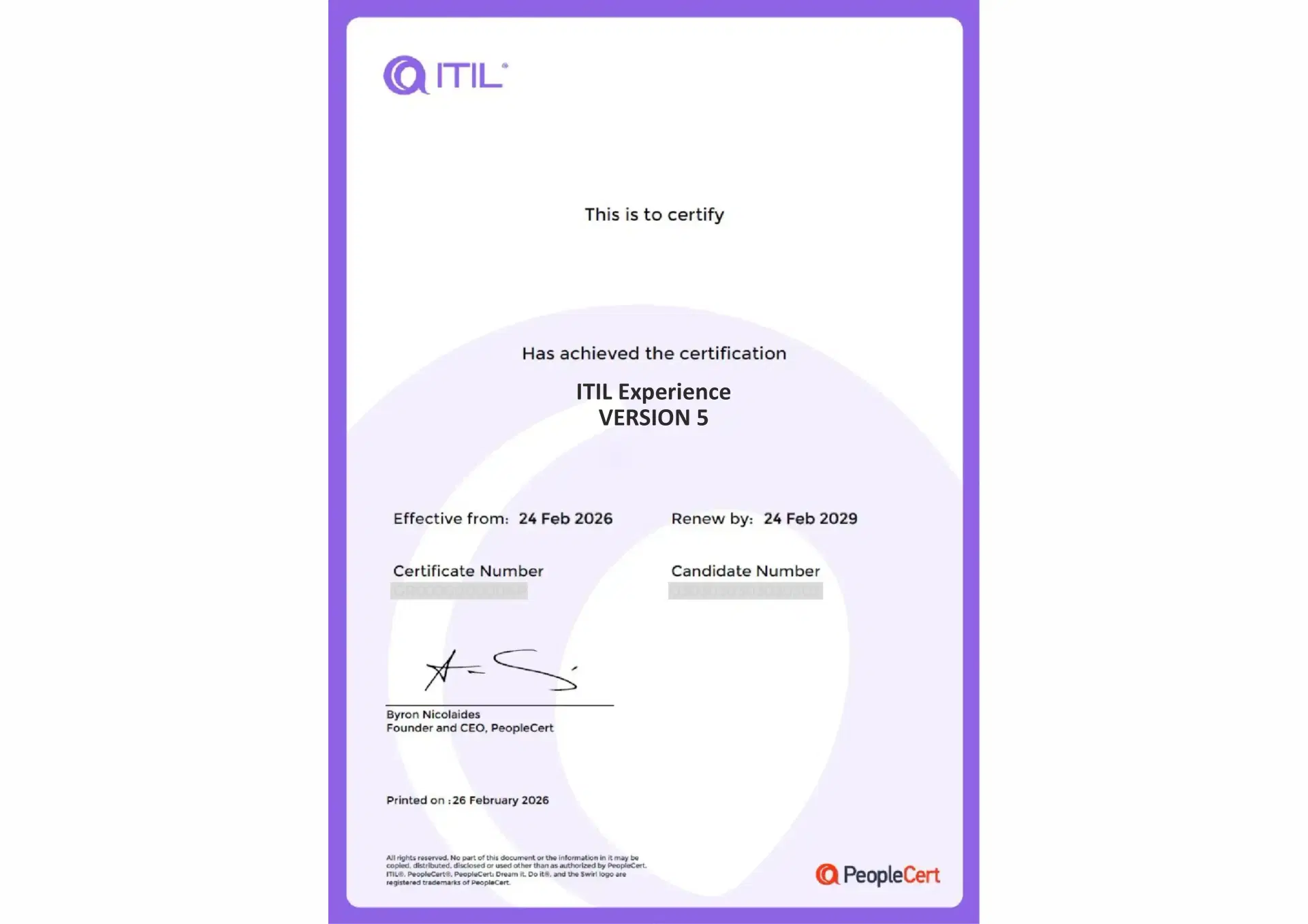
Exam Format – Multiple Choice
Exam Duration – 90 Minutes
No. of Questions – 40 Questions
Passing Criteria – Minimum 70% Score Required
Exam Type – Open Book